Road Base Calculator: CR-6 at the Depth It Finishes At
Enter your project dimensions
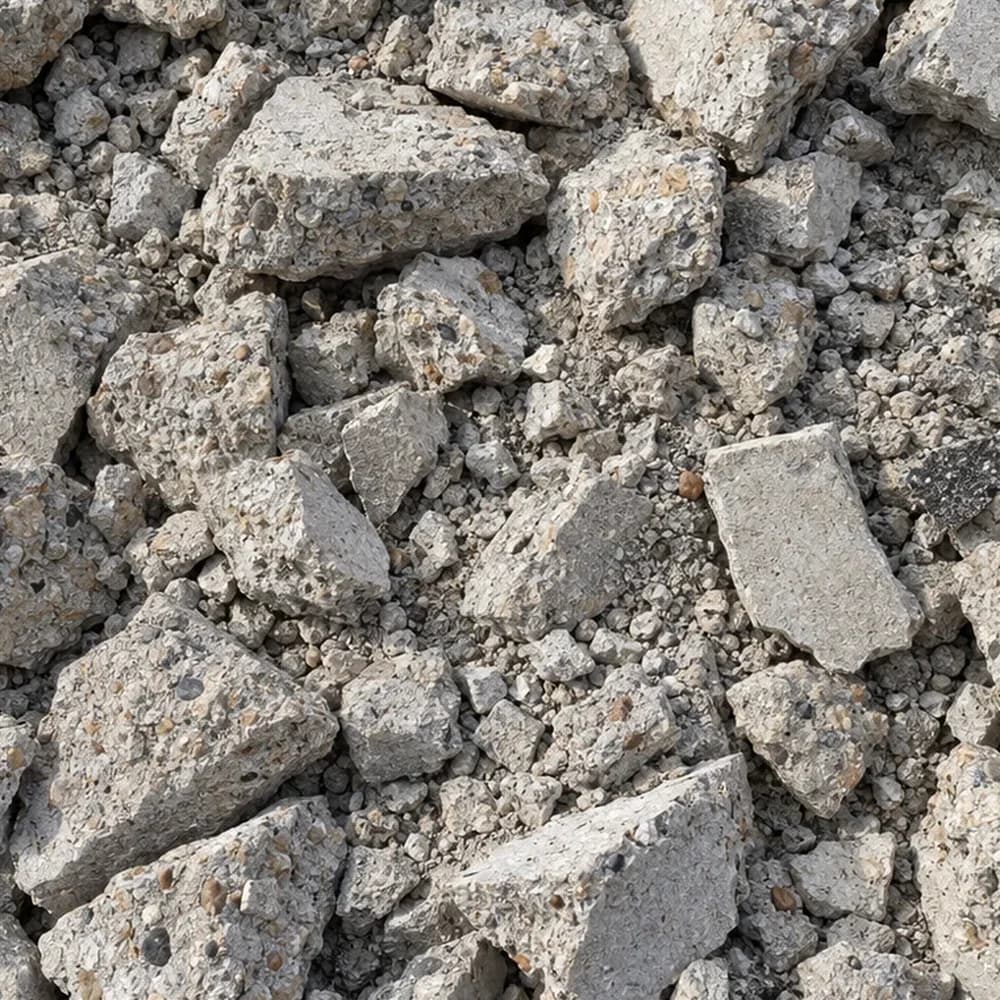
A drawing prepared to MDOT SHA Section 901 will call the highway base course graded aggregate base, the yard ticket in front of you says CR-6, and the neighbor who did their own drive last summer calls the whole lot crusher run. Only one of those is the product this road base calculator is sized around. CR-6 is the designation Maryland uses for dense-graded driveway and road base; Crusher Run is a separate listing in this catalogue, a compacting blend bought for much the same work; GAB is how a highway specification writes it rather than something a storefront can hold a certificate for. Pick your depth first, because on Maryland ground that single entry moves the tonnage further than anything else on the form.
Compacted depth by job, from a shed pad to a shared farm lane
| What is being built | Compacted depth | Why that figure on this ground |
|---|---|---|
| A light residential drive on firm Piedmont loam | 4 inches | Enough to spread car loads where the subgrade drains |
| A drive taking daily cars and the odd delivery truck | 6 inches | Axle loads travel down through depth, not across width |
| A lane or pad over soft, wet Coastal Plain ground | 8 to 12 inches | Flat Shore land sheds water slowly and the base has to sit above it |
| A shipping container pad | A full 8 inches, over fabric | The weight lands on four corners rather than the whole footprint |
| An equipment or trailer yard | 8 inches | Parked loads sit in one spot for weeks at a time |
Every figure in that middle column is the depth after rolling. Frost is not what sets it: frost reaches roughly 30 inches under most county codes here, 36 in Garrett and Allegany, 24 in a few Eastern Shore counties, and no drive base is built that deep. Depth buys load spread and drainage, nothing else.
Two Maryland cautions belong with that table. On the limestone ground of the Hagerstown and Frederick valleys, water runs away through cracks in the rock, so a drive should shed its runoff across a width rather than into one funneled spot. Out on the Eastern Shore and in low Southern Maryland, a high water table is the reason the deeper end of the range exists at all.
Shapes, feet and inches: entering a drive that changes width
Rectangle handles a pad or a straight run. Circle takes a diameter measured across the widest point, which is the setting for a turnaround or a tree ring cut into the lane. Multiple areas holds up to five pieces at once, and that is what a drive with a parking apron partway along it actually is.
Lengths, widths and diameters go in as feet. On a lane that narrows and widens, run the tape along the centerline for the length and use an average width rather than the widest point. Depth goes in as inches, anywhere between 0.25 and 24, and it should be the compacted figure from the table above. Choose the material next, since that selection is what sets the weight used in the conversion, then leave the box marked add 10 percent extra for compaction and spillage ticked, or untick it. Cubic yards, tons and cubic feet all come back together, and the result can be emailed over as a written quote.
A 14 by 36 trailer pad and a 180-foot lane, run through
Both are made up for this page.
Trailer pad, 14 by 36 feet, at 6 inches compacted. The area is 504 square feet and six inches is half a foot, so the volume is 252 cubic feet. Divided by 27 that is 9.33 cubic yards, and at 1.50 tons to the yard the order comes to about 14 tons. With the 10 percent box ticked it reads 10.26 cubic yards, near enough 15.4 tons.
Farm lane, 180 feet long and 11 feet wide, at 6 inches. That is 1,980 square feet at half a foot, so 990 cubic feet, which is 36.67 cubic yards, or roughly 55 tons. With the allowance, about 60.5. A run that long wants the material dropped at two points along it rather than piled at the gate, because moving base stone uphill after delivery is the part nobody enjoys.
Container pad, 8 by 20 feet, at 8 inches over fabric. Area 160 square feet at two thirds of a foot gives 106.7 cubic feet, which is 3.95 cubic yards and about 5.9 tons.
Before any of those go down, strip the organic layer. Stone laid over topsoil pumps mud up through itself whatever the depth, and on soft or wet subgrade a woven geotextile between soil and stone earns its place. Build in lifts of 4 inches or less and roll each one. Pitch the finished surface 2 to 3 percent from the centerline out to both edges so storm rain leaves rather than stands.
What the fines are worth: 3,000 lb in every published cubic yard
| The layer on a Maryland drive | What goes in it | This site's published weight |
|---|---|---|
| Base and sub-base | CR-6 | roughly 3,000 lb a cubic yard, or 1.50 tons |
| A finer mix for close grading and paver beds | Crusher Run | the same roughly 3,000 lb, so the layer decides it rather than the weight |
| Wearing course raked over the top | driveway gravel or #57 stone | roughly 2,800 lb, or 1.40 tons |
| A construction entrance built on the same base | #4 crushed stone | roughly 2,900 lb, or 1.45 tons |
Those are approximate figures, published by this site, and the reason the base line is the heaviest of them is the dust. Washed stone leaves voids between the pieces; a graded blend with fines packs them, so the same volume carries more. It also means the material holds water, which is why a French drain or a wall backfill wants a clean washed grade off the stone calculator instead. A patio build-up is measured out past the paver edge and belongs on the paver base calculator.
Why the lifts matter more than the extra 10 percent
The allowance on the form is 10 percent, ticked by default and easy to untick, and on a 55-ton lane that is about five and a half tons of cover. It is not a substitute for ordering to the compacted depth. Dig and order to the finished figure, let the loose material sit proud, then roll it down to the line.
Rounding does the rest. A pad that calculates at 14.7 tons is a 15-ton order, and the spare goes into the ruts that appear at the first thaw. Base work runs spring through late fall across the state; frozen or saturated ground will not compact, and that window stays shut longest up on the Garrett plateau, where the season opens later and closes sooner than anywhere else here.
Common questions
The contractor wrote CR-6 on the estimate. Which listing is that in the catalogue?
It is the road base listing, sold by the ton. Take the tonnage from the form straight into the quantity box there and pick your delivery date on the same page. If the estimate says crusher run instead, use the Crusher Run listing; both convert at the same published weight, and what separates them is the job, with CR-6 spreading the load under a drive and crusher run screeding flat under pavers.
Fifty-five tons will not sit in one pile. How should the drop be planned?
Split it. On a long lane, ask for the material to be set down at two points along the run rather than all at the gate, so the spreading works outward from each pile instead of being carried the length of the drive. Every drop spot needs firm ground under a loaded truck, clear space overhead and room to back in. Delivery is arranged at checkout by ZIP code, and the delivery page covers the rest of what the driver needs.
The result shows cubic yards and tons together. Which one does a lane get ordered in?
Tons. The cubic yard figure is the volume your excavation has to hold, and it is worth writing down because it tells you how much you are digging out and carting away. The ton figure is the one the listing prices against, so that is what goes in the quantity box.
Is the 6 inches I type the depth of the stone as tipped, or after rolling?
After rolling, always. Loose base tightens under a plate or a roller, so material raked out level at 6 inches finishes lower than that. Excavate to the compacted target, order against it, spread proud in shallow lifts and roll each one down. Entering the loose depth is how a drive ends up an inch thin all over.
There is a turning circle at the end of the lane. How do I get a figure for it?
Use the circle setting and measure straight across the widest point rather than around the edge. A 12-foot circle covers about 113 square feet, and at 4 inches that is 37.7 cubic feet, or 1.40 cubic yards, roughly 2.1 tons. Add it as a second area in multiple-areas mode and the form totals it with the lane.
Related calculators
Thirty tons. Zero delivery fees.
Road base priced per ton, hauled free, at lane quantities where hauling usually costs the most.