Bulk Landscape Materials Through the Maryland Build Year

3/4" Crushed Stone
For Maryland driveway and patio work, 3/4" Crushed Stone provides an angular surface that stays orderly through regular use and weather. Size: Approximately 3/4 inch. Type: Angular crushed stone.
Free Delivery

3/8" Crushed Stone
For Maryland patios, garden walks, and prepared driveways, 3/8" Crushed Stone creates a smoother finished surface with firm compaction. Size: Approximately 3/8 inch. Type: Angular crushed stone.
Free Delivery

#57 Stone
A yard drainage run through Maryland Piedmont clay benefits from #57 Stone, an angular aggregate suited to drainage and concrete mixing. Size: 3/16 inch to 1 inch. Grading: #57. Type: Angular crushed rock.
Free Delivery

#67 Stone
On Maryland jobs, #67 Stone fits beneath drainage runs or into concrete where angular crushed aggregate and a neat finished surface are called for. Size: 1/4 inch to 3/4 inch. Grading: #67. Type: Angular crushed stone.
Free Delivery

Screenings
Using Screenings as the entire support layer is a common patio mistake in Maryland. Over a prepared base, they make paver bedding flat and firm. Size: 1/4 inch minus. Grading: Stone dust and fine particles. Type: Angular crushed stone.
Free Delivery

Drain Rock
Drain Rock gives Maryland yard-drainage runs and retaining-wall backfill a clear water path through Piedmont clay or shore sand. Size: 3/4 inch to 1-1/2 inch. Grading: Washed to remove fines and dust. Type: Rounded or angular varieties.
Free Delivery

#89 Crushed Stone
At the finish stage of a Maryland patio, #89 Crushed Stone provides compactable fill for paver joints and flagstone bedding. Size: About 3/8 inch down to fines. Grading: #89, carries some fines. Type: Angular crushed stone.
Free Delivery

#8 Crushed Stone
Maryland patio and yard-drainage work can run into standing water in Piedmont clay. #8 Crushed Stone supports pavers, drainage details, and concrete mixes. Size: About 3/32 inch to 3/8 inch. Grading: #8, clean with little to no fines. Type: Crushed stone.
Free Delivery

#4 Crushed Stone
Set #4 Crushed Stone below Maryland driveway work where a free-draining layer is needed before the traffic surface is built. Size: About 3/4 inch to 1-1/2 inches. Grading: #4. Type: Angular crushed stone.
Free Delivery

Railroad Ballast
For Maryland equipment pads and work roads, Railroad Ballast forms an open, load-bearing stone layer that lets water leave the base. Size: Roughly 1 inch to 2.5 inches. Grading: Graded to interlock under load while draining freely. Type: Large angular crushed stone.
Free Delivery

RipRap
Maryland Piedmont clay and Eastern Shore sand can leave bare ground exposed to runoff. RipRap covers vulnerable areas with heavy stone. Size: 4 inches to 12 inches and up. Type: Large, heavy stone.
Free Delivery
#78 Crushed Stone
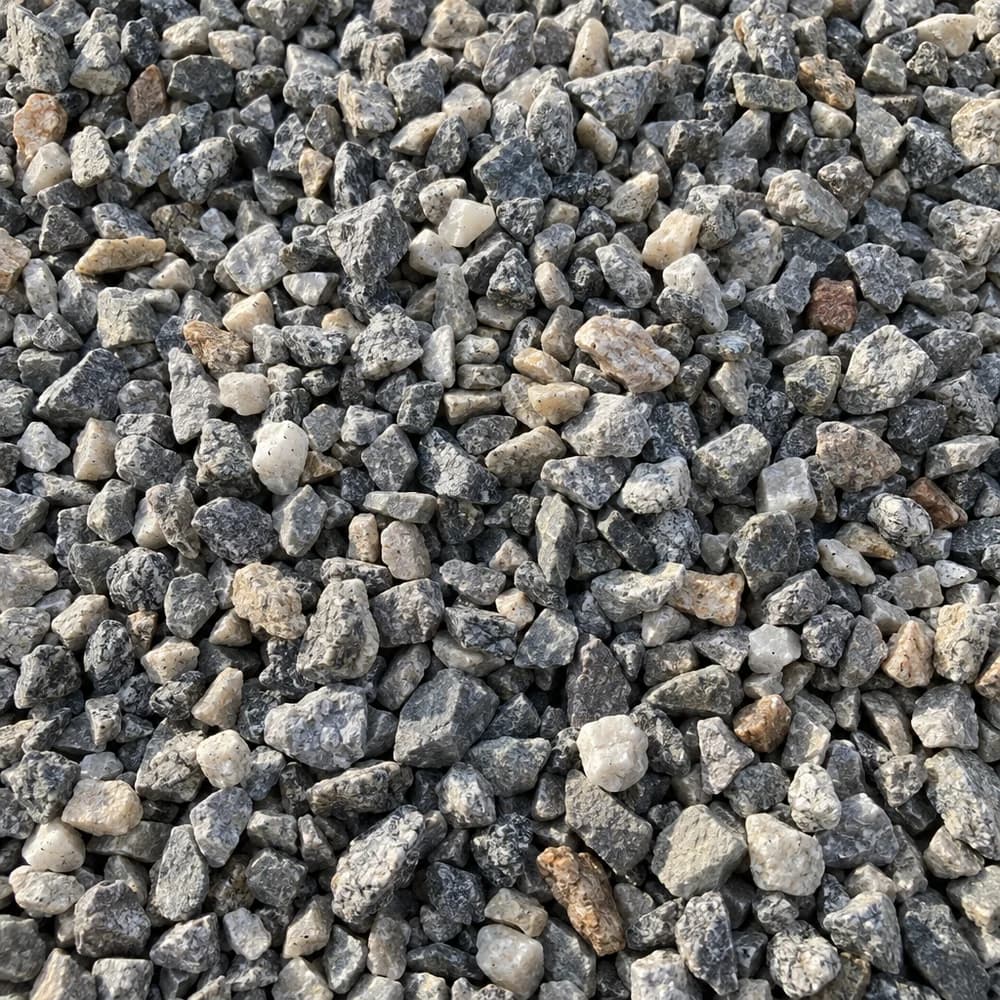
In Maryland, do not use #78 Crushed Stone where a dense, fine-filled surface is needed; it is meant to remain open. Size: About 1/8 inch to 1/2 inch. Grading: #78, washed with little to no fines. Type: Angular crushed stone. Supplied as: #78 or the closest local equivalent; we confirm the exact material before delivery.
Free Delivery
#2 Crushed Stone
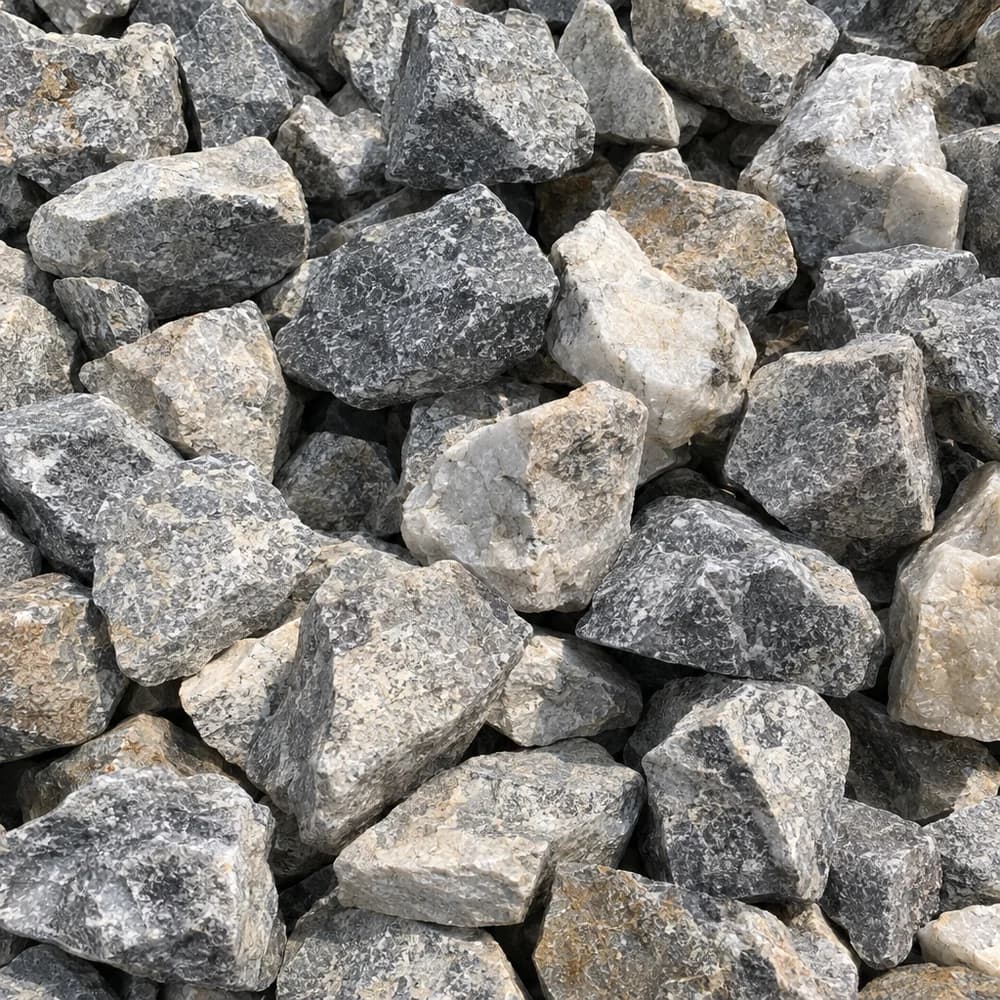
With a rough, open appearance, #2 Crushed Stone suits Maryland culvert, ditch, and construction-entry work where water needs room to move. Size: About 1-1/2 inches to 2-1/2 inches. Grading: #2, washed with no fines. Type: Large angular crushed stone. Supplied as: #2 or the closest local equivalent; we confirm the exact material before delivery.
Free Delivery
The whole catalogue, and the order you need it in is set by the weather rather than by the menu. Base work waits for ground that will compact, drainage work follows the storms that expose it, and planting material goes down when there is still season left for roots. Read the catalogue this way and most of the "which one" questions answer themselves.
Late winter: what moves while the ground is still hard
Frozen or saturated ground stops compaction, longest in Garrett and Allegany counties and shortest on well drained sandy loam. The work that still makes sense is diagnostic. Walk the drive and mark the ruts, watch where meltwater collects, and price the layers.
Two products do move now. Fill Dirt raises a grade or closes a low spot ahead of anything else going over it, and Drain Rock goes into a trench that has been cut and is waiting.
Spring: base and paver work, once a plate compactor will bite
This is the run that carries the year.
| Layer | Product |
|---|---|
| Compacted base under a drive, pad or shed | CR-6 |
| Finer compacting base layer | Crusher Run |
| Open base under heavy traffic or wet subgrade | #4 Crushed Stone |
| Bedding under pavers and flagstone | Screenings, stone dust locally |
| Joint and chip material | #8 Crushed Stone, #89 Crushed Stone |
| Drive surface over compacted base | Driveway Gravel, 3/4" Crushed Stone |
| Paths and garden walks | Walkway Gravel, 3/8" Crushed Stone |
| Bedding and leveling sand | Mason Sand, Washed Sand |
CR-6 is the designation a local spec uses for that graded base, and the listing carries the size and grading rather than an approval. Order the base and the surface as separate lines. They sit at different depths and weigh different amounts per yard.
Summer storms: drainage, edges and shoreline stone
Thunderstorms, nor'easters and tropical storm rain find every flat spot and every unprotected bank. What goes in now is washed and open, with the fines taken out so water passes through.
#57 Stone and #67 Stone fill French drains, drywells and wall backfill. RipRap armors a Bay or tidal river shoreline, a culvert outlet or a scoured stream bank. Large River Rock settles a dry creek bed, and River Rock or 3/8" Natural Pea Gravel finishes a splash bed or a border. Railroad Ballast builds an open, load-bearing pad where water has to leave the base quickly.
Near tidal water, check the Critical Area coverage allowance with the county before adding stone surface.
Autumn: soil, seed and the last of the base work
The ground is still warm, the rain is more reliable and there is time for roots. Top Soil rebuilds a lawn or finishes a grade, Garden Soil fills raised beds, and Shredded Mulch goes over beds and tree rings at 2 to 4 inches once planting is done. Base work continues until the first hard freezes close it.
Working out how much of each
Every product has its own weight per cubic yard, which is why one calculation across two layers gives the wrong answer for both. Take each layer to the material calculators, then set the tonnage and a date on the product page.
Common questions
My drive needs a base and a wearing surface. How do I plan the two together?
Treat them as two products, two depths and two calculations. A compacted CR-6 base of 4 to 6 inches carries the load, and a 2 inch layer of driveway gravel or washed stone over it gives the surface. They weigh differently per cubic yard, so a single calculation at the combined depth gives a tonnage that suits neither. Build the base, roll it, then top it, and if the two arrive together, keep the piles apart.
The subgrade is soft. Does that change what I order?
It changes the depth and sometimes the product. Saturated Piedmont silt or a low Coastal Plain site with a high water table will not support a thin base, so the layer goes deeper and sometimes starts with an open stone such as #4 crushed stone before the graded blend goes over it. It also changes the timing: nothing compacts properly into ground that is still wet, so let the site drain first rather than ordering more material to compensate.
Can I add a product to an order I have already placed?
Work from the confirmation email, which carries the order and delivery details, and send the change as early as you can through the contact form. A load that has already been scheduled is harder to alter than one still being arranged. If material runs short once a layer is down, a second order is usually simpler than adjusting the first, and cancellations follow the refund policy published on the site.
What am I choosing at checkout, once the product is in the basket?
The quantity, the delivery date and the ZIP code for the address the truck is going to. The ZIP is what arranges delivery, so use the site ZIP rather than a billing ZIP if they differ, and add anything the driver needs to know about the drop spot as a note at the same time rather than on the day.